The Street Corner as a Small Public Room
A street corner can feel like a place to pause, not just pass through. Learn which edge, entrance, and seating choices fit the corner you have.
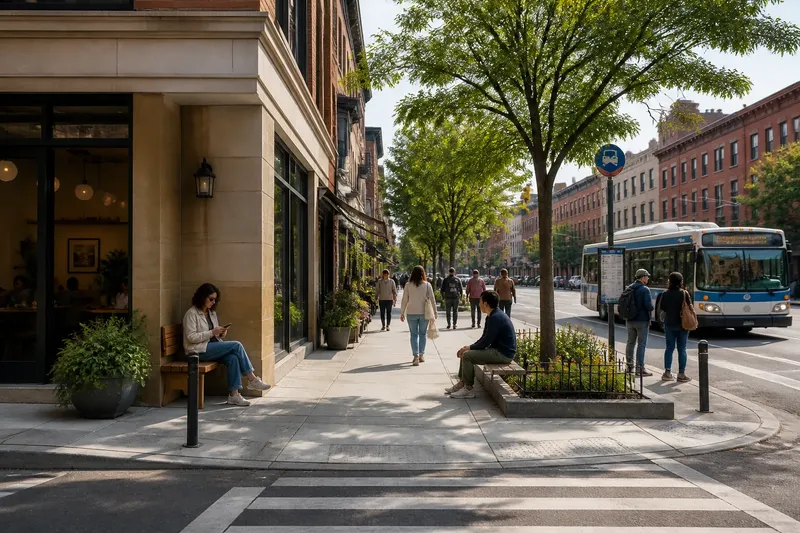
How can a street corner become a place to pause rather than a spot people hurry across? The street corner as a small public room depends less on decorative furniture than on how its edges meet: the curb, building fronts, doorways, and routes through the junction must make room for both stopping and movement.
Start by asking what the corner already invites people to do. Someone waiting for a friend needs a different arrangement from someone carrying groceries past a busy entrance. A useful decision guide sorts corners by their everyday conditions, then fits any pause space around those conditions instead of treating every junction alike.
Read the existing corner
Before proposing a bench or widening a sidewalk, watch the corner through an ordinary stretch of the day. Notice which direction people approach from, where they naturally slow down, and whether anyone already waits there. Look for delivery doors, building entrances, transit connections, curb ramps, signal poles, utility cabinets, and the path people take when crossing.
Those details reveal whether a corner has spare room or only appears open. A broad-looking paved area may be a working route for people using wheelchairs, a place where a door swings, or a queue that forms at a café. Conversely, a narrow recess beside a wall may offer a sheltered place to stand without interrupting the main walking line.
Pay attention to the edges, not just the center. A person is more likely to pause where a wall, planter, or low ledge gives the space a readable boundary. An exposed patch in the middle of a junction can feel like leftover pavement, even if it is physically large.
For a fast, crowded corner
If people move through continuously and the sidewalk is tight, keep the through-route clear. This situation suits a minimal pause point at the edge, if there is room: a leaning rail, a short seat against a building, or a small ledge outside the main pedestrian flow. The aim is to offer a place to wait without making everyone else weave around it.
Do not put a seat where people have to step around its ends or where a queue would spill into a curb ramp. A clear walking line matters especially at the corner’s turning point, where people coming from several directions meet. Keep the crossing approach legible, and avoid arranging furniture so that a person waiting appears to be standing in the path.
Where there is no suitable space for seating, a well-positioned standing area may be the more honest choice. A wall edge or a broad pier can provide a place to pause without pretending the corner can support a full gathering. It is not worth adding decorative objects merely to make a constrained junction look furnished; they can consume the little room that makes it usable.
For a quiet residential corner
A calm corner with a generous sidewalk can support a more settled pause. This situation may suit a bench oriented toward the street, a tree pit with a protective edge, or a low seat facing a front door or small shop window. The best arrangement gives people something to look toward while keeping the building entrance and crossing approach open.
Choose an orientation with care. A seat facing directly into a doorway may make residents feel watched or block someone entering. A seat turned toward the street can make the corner feel connected to neighborhood life, while a slight angle can offer a quieter position for conversation. The choice depends on the actual paths and sightlines, not a universal rule about which way benches should face.
Consider whether nearby residents will hear conversations late in the day, and whether a seat will become a place for short waits or longer stays. A small public room should feel available without turning a private threshold into its only usable edge. If the corner has several doors, leave clear space at each and avoid making one entrance the back of a seating area.
For a corner with active doors
Where shops, cafés, libraries, or community rooms open onto the junction, the entrance is part of the corner’s public life. This situation often suits a modest waiting place close enough to the activity to feel connected, but far enough away to keep the doorway clear. People may pause to meet someone, check a phone, or wait for an order; a place to stand can be more useful than a formal seating area.
Look at how doors open and how people gather before deciding where an edge or seat belongs. A café queue may shift with the time of day, while a library entrance may need a clear approach for people carrying books or using mobility aids. Keep the route from sidewalk to door direct, and do not place an object where it narrows that route or hides someone stepping out.
Imagine a corner shop with a recessed doorway and a busier sidewalk along its other edge. If the recess stays clear of deliveries, a short bench set inside the recess could give a waiting neighbor a place to sit while leaving the shop door and walking line unobstructed. If deliveries routinely occupy that recess, a standing spot against the opposite building edge may fit better; the expected result is a pause point that does not compete with the entrance’s actual use.
For a broad, exposed junction
A wide corner can feel less welcoming than a narrow one when it offers no shelter or defined edge. This situation calls for a pause area that gives the space a human scale without obstructing views across the crossing. A tree, planter, seat, or low wall can help mark a place to stop, provided it does not create a hidden pocket or interfere with visibility.
Think about sun, wind, rain, and the direction people face while waiting. A seat in full afternoon sun may go unused, while one screened from the wind by a building edge may work well. Shade from a tree can make a difference, but the planting area must be placed so roots, maintenance access, and pedestrian routes can be accommodated.
Do not fill a broad junction simply because it looks empty. The open area may help people see approaching traffic, move in groups, or find a clear route across. Introduce one clear edge or pause point first, and make sure the rest of the corner still reads as a crossing rather than a maze of objects.
For a corner beside transit
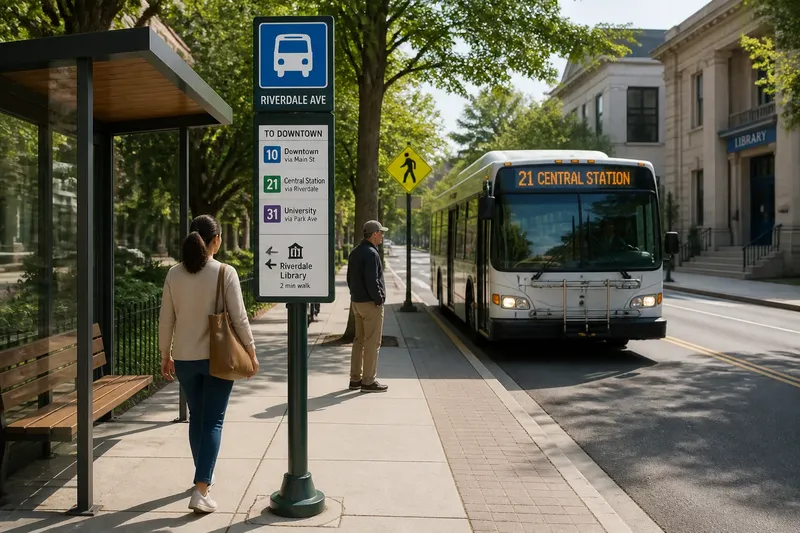
At a transit stop, people already have a reason to wait, so the corner’s role is partly practical. This situation suits a layout that separates the waiting area from the main walking path and keeps access to the stop obvious. A seat can help some riders, while an open standing area allows people to gather without blocking the sidewalk.
Account for the way queues form and shift. Riders may cluster near a sign or shelter entrance, then spread out when a vehicle arrives. Keep the path to the boarding point clear, and avoid positioning a bench so that people waiting in front of it block passersby. If a shelter is nearby, the corner may work better as an overflow waiting area than as a second, competing destination.
Transit equipment and street furniture need to work together. A sign, pole, shelter panel, and bench can quickly crowd a small corner. The goal is not to fit every amenity into the same spot; it is to make the waiting route easy to understand and leave enough open space for people to pass.
What should the edge do?
Should a corner have a bench?
A bench fits when there is room to sit outside the through-route and away from doors, curb ramps, and waiting queues. If those conditions are absent, a standing edge or open waiting area is a better fit.
Where should a seat face?
Face it toward a useful view, such as the street or a public entrance, while keeping the doorway and crossing in clear view. Turn it slightly if a direct orientation would make people feel exposed or place the seat in the path.
Does every corner need a planter?
No. A planter helps when it defines an edge, adds shelter, or protects a pause area without narrowing the route. Skip it if the corner is already crowded or if it would obstruct sightlines at the crossing.
How can a corner feel welcoming without furniture?
A clear building edge, a usable recess, or a well-defined waiting area can make a corner feel more settled without adding objects. Keep the walking route open and make the place to pause easy to recognize.
Check the fit before adding
Use a simple observation pass to decide what the corner needs. Stand back from the junction, then look from the approaches people actually use. Ask:
- Where is the main walking line, and does it stay clear through the turn?
- Which doors, ramps, signs, and transit features need unobstructed access?
- Where do people already slow down or wait?
- Is there a protected edge where someone can pause without blocking another person?
- Will a seat, planter, or rail preserve clear views across the crossing?
- Who is likely to use the corner, and can they reach the pause space comfortably?
If the answer to the last questions is uncertain, do not assume that more furniture will fix the corner. First clarify which activity belongs there: crossing, waiting, meeting, sitting, or a combination. A small adjustment to the location of a seat can matter more than adding another feature.
For public projects, the final arrangement also depends on access requirements, street ownership, and local rules. Check the relevant agency guidance and involve a qualified accessibility or streetscape professional where needed; labels, manufacturer instructions, and local requirements determine the details.
Choose the right pause
The street corner as a small public room works when a person can tell where to walk and where to stop. A fast corner needs a clear route and perhaps a compact edge; a residential corner can support a longer pause; an active doorway needs breathing room; and a transit corner needs orderly waiting space. Match the intervention to the corner’s everyday use, then leave enough room for the uses that do not stop.
One last useful check is to imagine the corner at a moment of overlap: someone crossing, someone leaving a shop, and someone waiting for a ride. If each person can see the route and pass without negotiating around an obstacle, the corner is doing more than filling space. It is making a brief pause feel like a natural part of the street.