A Window-Led Walk Through One Block
A window-led walk turns one city block into a readable street scene, helping you notice how ground-floor height, spacing, and transparency shape its character.
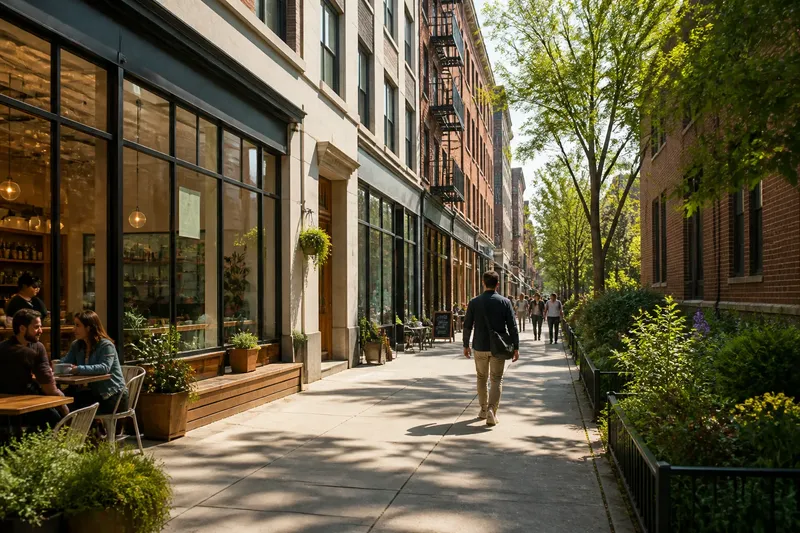
Where should you look to understand why one city block feels lively and another feels closed off? Try a window-led walk: follow the ground-floor windows for a single block and notice their height, spacing, and transparency. The exercise takes little time, but it gives your walk a clear subject beyond storefront names or architectural style.
Choose a useful block
Pick a block you can walk along without rushing. A mixed-use street is useful because it may include shopfronts, apartment entries, offices, and blank walls; a residential block can work just as well if its ground floors vary. Choose a stretch with a continuous sidewalk and a clear starting and ending corner.
Walk on the public sidewalk and observe from there. Don’t peer into homes, photograph people without permission, or step into a driveway to get a better angle. You are reading the relationship between the street and the building, not trying to learn what happens inside.
A short walking routine
Use a morning, lunch break, or other ordinary walk. A phone note or pocket notebook is enough. Record brief observations, not a full inventory of every pane.
- At the first corner: Note the general pattern. Are windows near eye level, raised above the sidewalk, or absent? Do they appear in a regular row or in scattered groups?
- Along the first half: Follow the ground-floor line at a steady pace. Mark where windows begin and end, and whether solid wall separates them.
- At the midpoint: Pause in a place that does not obstruct others. Look back toward the first corner and compare the two halves.
- Along the second half: Continue the same observations. Note any change in height, spacing, or what the glass lets you see.
- At the far corner: Write one sentence about the block’s overall feel and one observation that supports it.
Say you start beside a café with broad, clear windows and reach a stretch of apartments whose windows sit higher behind deep planting. You might note that the street shifts from visually open to more private, rather than calling one half better. That concrete change is the useful result: it ties a judgment about the block to something you can point to.
Read three window qualities
Height from the sidewalk
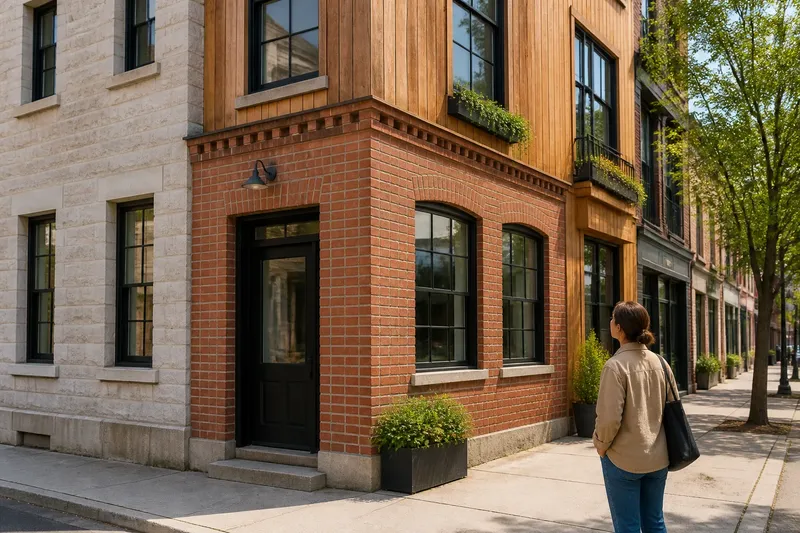
Look at where the glass sits relative to a person walking past. Low windows can bring activity close to the sidewalk, while higher windows may keep interiors more private or make the ground floor feel less connected. Record the visible relationship without assuming you know why the building was designed that way.
Spacing along the wall
Notice the rhythm between windows: repeated openings, a long blank interval, or a dense run of narrow panes. Spacing changes how quickly the façade seems to pass as you walk. A doorway, column, display panel, or deep recess can interrupt the sequence, so include it in your note rather than treating every gap as the same.
Transparency and reflection
Clear glass may show shelves, lights, or movement; tinted, reflective, screened, or heavily curtained glazing may reveal little. These are different kinds of visual connection, not a simple scale from good to bad. Sun angle and interior lighting can change what you see, so describe the surface in that moment instead of treating one glance as the whole story.
Notice the block’s changes?
What if a window is covered?
Record what is visible: blinds, a poster, a display, or a reflective surface. Don’t guess whether the space is occupied or what its intended use might be.
How should I compare two sides?
Walk each sidewalk if both are comfortably accessible, and use the same observations on each. A street tree, parked vehicle, or awning may block your view, so note the obstruction rather than filling in what you cannot see.
What if the block is mostly blank wall?
Follow the wall as part of the pattern and mark where doors, vents, gates, or openings appear. A long closed stretch is an observation in itself; avoid treating it as evidence about the people or businesses inside.
Should I return at another time?
Return if the first walk was affected by glare, closed shutters, or a busy sidewalk that made looking difficult. Compare only what changed in the view, such as reflections or visible displays, and keep the original notes so the conditions remain clear.
Keep notes specific
Use descriptions that someone else could recognize: “wide clear panes alternate with narrow brick piers” is more useful than “friendly windows.” If you want to sketch, draw a simple line for the ground floor and mark openings as gaps in it. No scale or architectural drawing skill is needed.
It is not worth trying to identify every window type, measure each opening, or infer a building’s history from the sidewalk. The point is to notice a pattern and how it changes as you move. If a sign, tree canopy, or construction screen hides part of the façade, write down that limit rather than forcing a complete reading.
Carry the observation forward
Before you leave, choose one question for a later walk: does the same pattern continue around the next block, or does it change near a transit stop or a cluster of shops? A window-led walk works best as a small, repeatable way to read a street, not as a verdict on a building.
For a window-led walk, keep the final note tied to what you actually saw: where glass sits, how openings repeat, and how much the sidewalk can see through them. That makes a brief city walk easier to remember—and gives you a sharper question to carry into the next one.